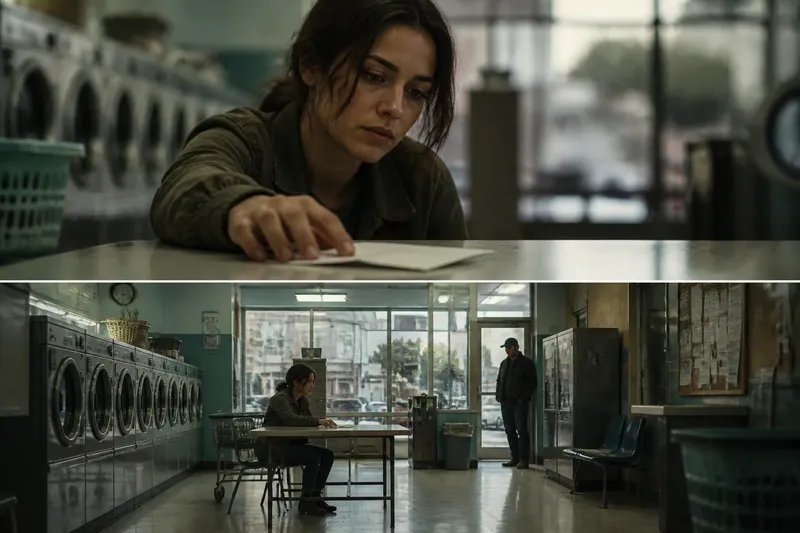
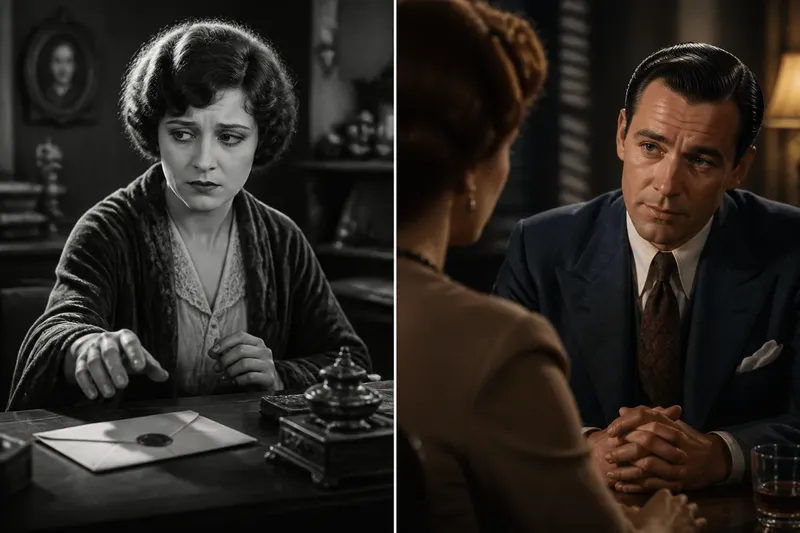
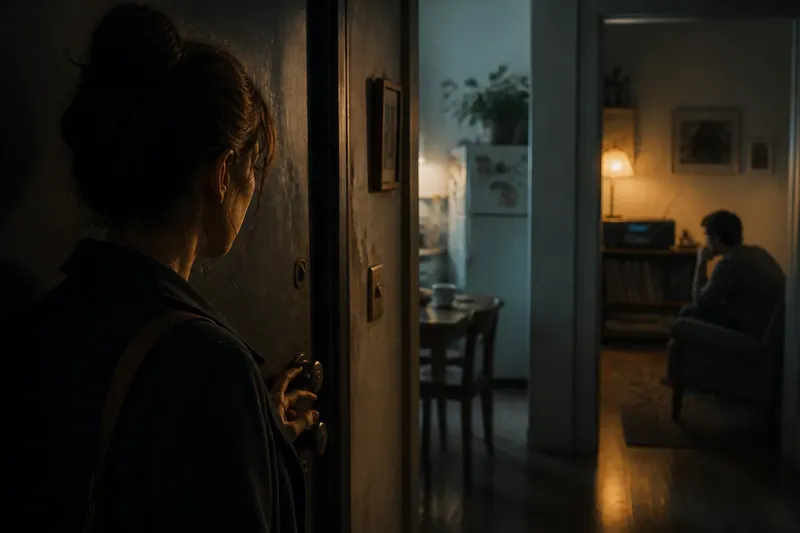
The Reaction Shot: How a Cut Makes Us Read a Face
Learn how a reaction shot changes a conversation’s meaning by tracing who looks, when the edit cuts, and what a listener’s face lets you infer.
A reaction shot can make a polite pause feel like disbelief, even when the listener’s expression barely changes. To read a reaction shot, track the order of looks and the instant the cut places a listener beside a line.
The edit selects a moment and gives it emphasis. A listener shown before a line, during it, or after it can seem to anticipate, absorb, question, or reject the speaker’s words. Timing and context shape those readings; a face alone does not settle them.
Track the cut against the line
Watch the exchange once for the basic dialogue. Then replay it and mark when the film cuts from speaker to listener: before a key phrase, while it is being said, or after the sentence ends.
An early cut lets the viewer watch the listener receive words as they arrive. A late cut presents the face after the thought is complete, so the reaction may feel like an answer. Neither timing proves what the listener feels.
Notice whether the speaker’s voice continues over the listener’s shot. Dialogue carried across a cut keeps the speaker’s words present while the listener’s face occupies the image. A pause, room tone, or offscreen reply changes the weight of that interval.
Follow an invented exchange through its edits
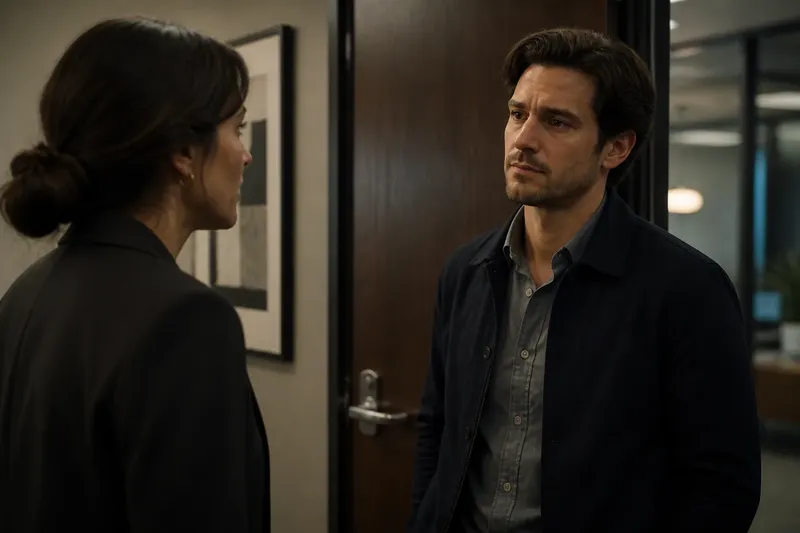
Imagine two coworkers, Mara and Eli, standing beside a closed office door after a meeting. Mara says, “I told them the proposal was yours.” This is an invented situation. The line might offer credit, accuse Eli of something, or remind him that Mara has drawn attention to his work.
In the first version, the film stays on Mara through the line, then cuts to Eli. He holds her gaze for a beat and says, “You didn’t have to.” The delayed cut frames his face as a response to the complete statement, but his quietness could still suggest gratitude or discomfort.
Now suppose the edit cuts to Eli as Mara reaches “the proposal,” while her voice continues over his face. The viewer sees him receive the rest of the sentence in real time. His stillness might read as surprise, or as caution before Mara has explained herself.
Finally, imagine the shot holds on Eli after his reply while Mara falls silent offscreen. If he keeps looking at her, the line may sound appreciative; if his eyes return to the door, the exchange may feel unfinished. The edit directs attention to the pause without resolving its meaning.
Describe what is visible before interpreting it
When a reaction seems clear, record the behavior first: the listener keeps eye contact, lowers their gaze, tightens their mouth, or turns away. Then name the interpretation the sequence encourages and consider another reading the same details could support.
A restrained smile after a boast may look amused; after an apology, it may seem warm or doubtful. The expression can remain similar while the surrounding words and cut alter its apparent significance.
Sound offers another clue. Listen for a voice that continues across the cut, a reply that begins offscreen, or a pause that leaves the listener’s face alone. These details can make a reaction feel immediate, delayed, or unresolved.
Questions about reading a reaction shot?
What does an early cut to the listener suggest?
An early cut places the listener beside words that have not finished. It invites you to watch the response develop as the phrase arrives, without establishing exactly what the listener understands.
What changes when the cut comes after the line?
A cut after the line presents the listener’s face as a response to the completed thought. A following reply may still change how that reaction first seemed to read.
How can a held reaction change a scene?
Holding on the listener keeps the interval in view after the speaker stops. Silence or a delayed answer can make the exchange feel unresolved without explaining why.
Can the same expression suggest different meanings?
Yes. A small smile might suggest warmth, embarrassment, or skepticism depending on the dialogue and the cut around it. Describe the visible behavior before deciding which reading fits best.
Map the cuts and choose what to inspect
For a scene that feels difficult to read, replay it and make one row for each shot or meaningful cut. Record what is visible, then use each observation to decide what to check next.
- Speaker: Check who is talking at the start of the shot. If the speaker remains visible through the key phrase, compare that stretch with the next cut; if not, note where the voice continues offscreen.
- Listener: Check whose face or eyeline appears. If the listener is visible, describe the specific action; if no listener appears, mark that the sequence withholds a facial reaction.
- Cut point: Check whether the cut lands before, during, or after the key phrase. If it lands during the phrase, listen for continuing dialogue; if it lands after, compare the face with the listener’s next reply.
- Look: Check whether the listener meets the speaker’s gaze, looks away, or turns elsewhere. If the gaze shifts, replay the surrounding shot to see when it happens; if it stays steady, avoid treating that alone as proof of a particular emotion.
- Sound: Check whether dialogue continues, stops, or gives way to room tone. If the voice carries across the cut, note which words accompany the reaction; if sound drops out, inspect how the silence affects the pause.
- Next response: Check what the listener says or does afterward. If the response clarifies the exchange, compare it with the earlier face; if it does not, keep more than one interpretation open.
Say you map the invented office-door exchange and record that the cut lands on Eli during “the proposal,” Mara’s voice continues, and Eli later glances toward the door. First, you mark the words heard over his face. Next, you note that his gaze changes only after the line. One possible reading is that he is absorbing unexpected credit; another is that he is wary of what the disclosure may bring. The map supports both readings, so the resulting answer is that the edit creates uncertainty rather than a settled explanation.
If two readings remain plausible, replay once with the sound lowered and follow the cuts and eyelines; then listen without watching and note how the words and pauses shape your impression. Keep those observations separate from your interpretation so the sequence stays open to discussion.
Let the sequence keep its uncertainty
A reaction shot is best read as a placement in a sequence, not as a subtitle for emotion. Trace the cut against the dialogue, describe visible behavior, and distinguish what the film shows from what you infer.
When a conversation shifts after a listener appears, use the reaction shot as a cue to inspect the timing and sound. The face may narrow your reading, but the next line—or the absence of one—can keep the scene productively unresolved.